
The question we do not ask
"Do you think your company has a climate of fear?"
Since 26 May 2026, NR-1 — the Brazilian standard on occupational risk management — has made it mandatory to identify, measure and monitor psychosocial risks at work. Climate, culture and internal relationships, once treated as a management matter, have become a measurable legal risk. The EHO Method exists to make that risk visible, measurable and defensible.
For decades, proving that work had caused an illness was the accuser's job. NR-1 reversed that logic: it is now up to the company to demonstrate that it maintains a psychosocially healthy environment — with identification, control and continuous monitoring of risks.
Whoever holds that proof can mount a defence. Whoever does not walks into the hearing blind.
And there is an aggravating factor every manager needs to grasp: a token document does not protect — it exposes. If the Ministério Público do Trabalho (Brazil's labour prosecution service) suspects that a PGR or a psychosocial assessment is weak, cosmetic or poorly executed, it can open its own investigation, interview whomever it wishes and reach its own conclusions. A diagnostic without rigour is not neutral: it is one more liability.
That is why EHO was not designed to tick a box. It was designed to withstand scrutiny.
Taking the worker as a witness to the working environment, it organises information so as to identify and enable the combating of psychosocial risks.
What an organisation sees are the effects: turnover, sick leave, conflict, lawsuits. But those are only the tip of the iceberg. Below the surface lie the causes — the patterns of pressure, fear, overload and normalisation that produce all of it, long before they show up in the figures.
The EHO Method measures precisely that submerged part, across three levels:
The risk exists and is detected but it is cyclical, seasonal or episodic and will always be present as long as human interaction exists. What cannot happen is for it to escalate.
When pressure ceases to be episodic and settles in as routine. It measures the size of the risk already incorporated into structure and culture, according to intensity.
The deepest layer: the point at which the organisation no longer perceives its own risk. The intolerable has become normal. The higher the EDO, the blinder the company is to its own failings.
Here is the distinction that gives the method its strength. EHO does not ask workers what they think of the company, nor does it assess their emotional state — that would be opinion, and opinion does not hold up. EHO asks how often specific facts occur in daily working life.
Frequency is not a matter of opinion: it is established.
"Do you think your company has a climate of fear?"
"There is apprehension about reporting problems or disagreeing with leadership."
The worker is not examined. The worker reports. Their position is that of someone producing evidence about the environment — the same kind of evidence an audit or expert examination gathers when it interviews those who operate the process. They are the source, never the object being measured. That is the nature of the data EHO produces. And that is why it carries weight as evidence.
Everything that constitutes proof in court will satisfy an audit. But not everything that satisfies an audit constitutes proof in court.
An audit may be content with a signed form and the existence of a document. The Brazilian Labour Courts are not — they look for the reality of the facts. That is why EHO data collection was designed with guaranteed anonymity, chain of custody, traceability and integrity. Not even the contracting company can alter the questions, interfere with the answers or change the outcome. What the method reveals is a faithful picture of what was collected.
There is a technical reason why EHO goes beyond the bare minimum of the standard — and why that changes how much the report weighs against a witness in court. That is what we show in the technical demonstration.
International psychosocial assessment instruments were conceived elsewhere and later adapted to different countries. EHO took the opposite route: it was built from the ground up for the Brazilian reality, aligned from the outset with NR-1 and ISO 45003 — and not only with those.
Rather than measuring isolated factors, EHO captures the organisational patterns that produce them — the structural source of the risk, upstream of any symptom. It is a diagnostic that works on the cause, not merely on the effect.
Some questionnaires produced outside Brazil and currently being used to identify psychosocial risk only partially meet what the standard requires. Not fully because at times their questions stray from pure observation and end up asking the respondent's opinion or how they feel about something — and that is not what NR-1 asks for.
The dimension-by-dimension mapping of correspondence with NR-1, NR-17, the GRO Manual and the LDRT.
View / Download pdfReal, traceable and auditable data to underpin the GRO and the PGR, and to support the technical accountability of whoever signs them.
An objective reading of climate, culture and leadership, with the factors that strengthen or undermine the environment.
An instrument designed inside the logic of Brazilian labour proceedings, useful for both prevention and defence. Especially as a supporting piece in defending occupational causation for psychosocial diseases on the current LDRT list.
An understanding of the silent mechanisms that precede conflict, illness and liability, before they turn into loss.
Complying with the standard on paper avoids today's fine. Protecting the company requires more than that. Labour liabilities from illness arising from psychosocial risk can be extremely costly.
When the company monitors risk, documents it and acts on it, three things happen:
The link between work and illness becomes technically untenable once the indices demonstrate a controlled environment.
Negligence can no longer be presumed — there is scientific method, record and continuity.
It is demonstrated that they were not passive: they acted, invested, took care. The consequence stops at the legal entity.
For the business owner, it protects assets. For the technical officer, it protects accountability. For the company, it controls risk. For people, it creates an environment where good work is possible.
NR-1 does not ask for a single snapshot — it requires continuous management. Identify, treat, control and verify, in cycles that repeat whenever the environment changes.
EHO follows that cycle. Each new application measures how the indices have moved and generates proof that the company did not merely detect the risk but acted on it — and keeps acting. That is the difference between a company that reacted once and one that genuinely manages.
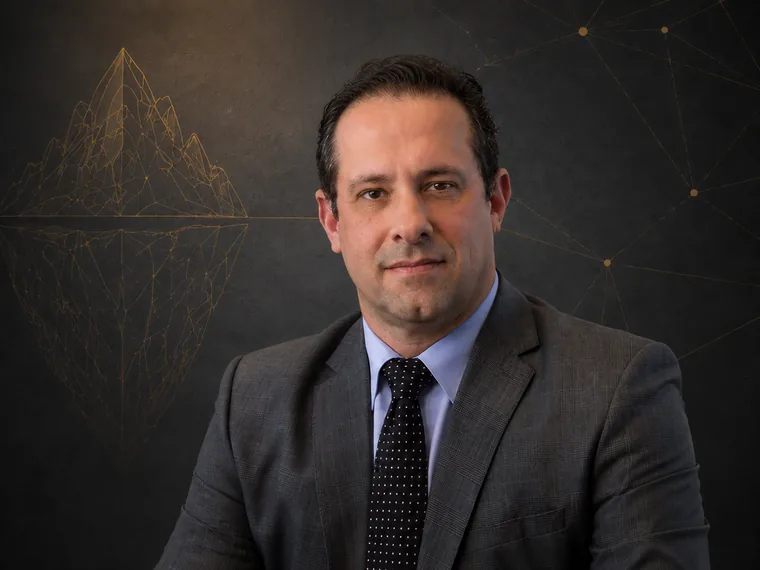
Carlos Alberto Wanderley is a lawyer, a law graduate and a specialist in labour law and labour procedure from Universidade Estadual de Ponta Grossa (UEPG). For nearly three decades he has worked at the intersection of people, organisations and the working environment.
His career defines EHO: he knows psychosocial risk from both sides. As a corporate and labour lawyer, he spent decades watching the moment when the working environment turns into litigation — and where corporate defence usually collapses for want of evidence. As a member of the leadership of a large industrial company, he lived organisational structure and people management from the inside — and saw what separates the company that ends up as a defendant from the one that stays protected.
It was from that crossing — the technique of the defender and the experience of the manager — that the studies on behaviour, climate, leadership and culture emerged, culminating in the Ecossistema Humano Organizacional (EHO) method, grounded in his book Ecossistemas Humanos nas Organizações.
 Dr. Maisa Regina H. Wanderley
 Dr. Waléria Genari Woinarovicz
 Dr. Walter José de Fontes
 Dr. Isadora Henneberg Reis
The technical demonstration shows the method at work — and why the EHO report has the robustness a defence requires.
Prefer to explore on your own? The trial gives you access to the EHO environment, with all 61 questions and every function — except the issuing of official reports, and limited to 10 applications.